Portfolio Governance
In control of projects and portfolios
In short, good portfolio governance means launching the right projects, managing them effectively, and making decisions that maximize value. To support your initiatives, projects, and programs, you establish collaborative structures, processes, and decision-making methods that facilitate this. You achieve your strategic goals while maintaining control over planning, capacity, and costs.

Strategy is key to your portfolio choices
As a portfolio manager, it is your responsibility to maximize value for your organization. What that value is has been defined in the strategic objectives. In doing so, you consider not only the change objectives but also your organization’s ongoing responsibilities or core activities. That is why effective portfolio management begins with defining and communicating the strategic objectives. These form the basis for decision-making regarding your portfolio.
A project approach that aligns with the objective
Not all initiatives within your organization are the same in nature. In addition to the going concern, there are, for example, initiatives related to continuous innovation. These are often approached using an Agile methodology. Other initiatives have a clearly defined scope and a deadline, such as relocations or system replacements. These benefit more from a waterfall approach. You’ll often achieve the best results with a hybrid approach: for each initiative, you determine which methodology is most efficient.
Cyclical decision-making according to a fixed process
In some organizations, decision-making shifts imperceptibly from the strategic to the operational level. When bottlenecks arise, project teams make decisions on their own: projects are postponed, or employees are reassigned. This does not always align with the original strategy. Good governance prevents this and ensures regular portfolio decisions, based on clear criteria and made by people with both an overview and accountability. A clear decision-making process is therefore essential. This allows you to maintain control, monitor priorities, and make choices that align with strategic goals.
Reports at the appropriate level
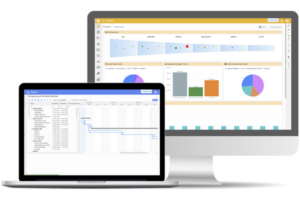
Good governance also means being able to justify and substantiate your portfolio choices and be transparent about progress. You do this using dashboards that provide real-time insight into the relevant data. Relevance varies by stakeholder. By developing dashboards for each stakeholder (or stakeholder group) that align with their role and responsibilities within the organization, you keep information organized. This is especially important in enterprise organizations where there are organizational objectives as well as separate objectives and change initiatives for each business unit.
Discover Fortes Change Cloud