
Getting a grip on projects across Europe: portfolio management at Shimano Europe Group
An interview with Jan Goes, Portfolio Management Officer, and Alessandra Orci, Project Manager at Shimano Europe Group
From 70 separate Excel projects to a single professional portfolio
Client: Shimano Europe Group
Industry: Retail & Distribution (Sports and Lifestyle)
Challenge: Getting grip on dozens of unstructured projects spread across fourteen European sales offices
Bicycle chains, sprockets, fishing tackle and lifestyle gear: Shimano’s products find their way from Japan to the entire world. Shimano Europe Group is the European headquarters for marketing and sales, with around fourteen sales offices spread across the continent. We spoke with Jan Goes and Alessandra Orci of the PMO department about how, with Fortes Change Cloud (FCC), they grew in four years from seventy scattered initiatives in Excel to one professionally managed portfolio.
From 1 to 14 offices
Shimano Europe Group operates from a single European headquarters with approximately fourteen local sales offices, each with its own approach and culture.
The organization
Shimano Incorporated, the parent company in Japan, manufactures all the technical components. Shimano Europe Group buys, sells and distributes these products across Europe through local sales offices. Those offices traditionally operated very independently. “It could happen that France implemented something because of local legislation, while Italy needed exactly the same thing, without either knowing about the other”, Jan explains. “We missed out on developing or purchasing it together, which makes it more efficient, faster and cheaper.”
When Jan started in 2017, there was no PMO department and no portfolio management. The request from senior management was clear: get a better grip on all the projects running across Europe. “I took my Excel file and simply started calling people all over Europe: what are you working on? It turned out that more than seventy project and initiatives were running at the same time, without any standardized way of working.”
The PMO has since grown into an international team with its own project managers, including Alessandra Orci: PMP and Prince2 certified, with 25 years of experience in project management. Her first project at Shimano? The implementation of Fortes Change Cloud, in May 2022.
First the process, then the tool
It’s worth noting that the tool wasn’t introduced until years after the PMO was launched. “On day one, they were already asking me which tool we were going to buy,” Jan laughs. “I said, ‘Let’s first define our way of working; the tools will follow naturally.’” Together with the “Portfolio Direction Group,” the scope of the portfolio was defined: initiatives that impact systems, processes, or organizational design. These are the projects that are crucial for achieving efficiency and standardization across Europe. This results in a diverse mix, ranging from IT implementations to setting up a new sales office in Iberia and building an experience center in Valkenburg.
On average, there are about fifteen projects running simultaneously, with teams typically consisting of ten to fifty people, with the European SAP implementation—involving over two hundred people—standing out as the exception. Project members usually do this in addition to their regular work; in total, this amounts to 50,000 to 100,000 internal hours per year.
“
On day one they were already asking me which tool we were going to buy”, Jan laughs. “I said: let’s first establish our way of working, then the tooling will follow naturally.”
“
Jan Goes
Portfolio Management Officer, Shimano Europe Group
Choosing Fortes Change Cloud
During the vendor selection, Shimano compared three solutions. “We chose Fortes because it was ready to use out of the box, with just some configuration. Other tools can do everything too, but you have to build them entirely yourself and that takes an enormous amount of time”, says Jan. “And we found the philosophy behind the tool very strong: strategy, portfolio, programs, projects. You work from your portfolio downwards. Projects aren’t started just anywhere; you keep control over what gets started and when it closes. That way, no clutter builds up and it’s crystal clear for everyone in which stage/phase a project is in and what to expect.”
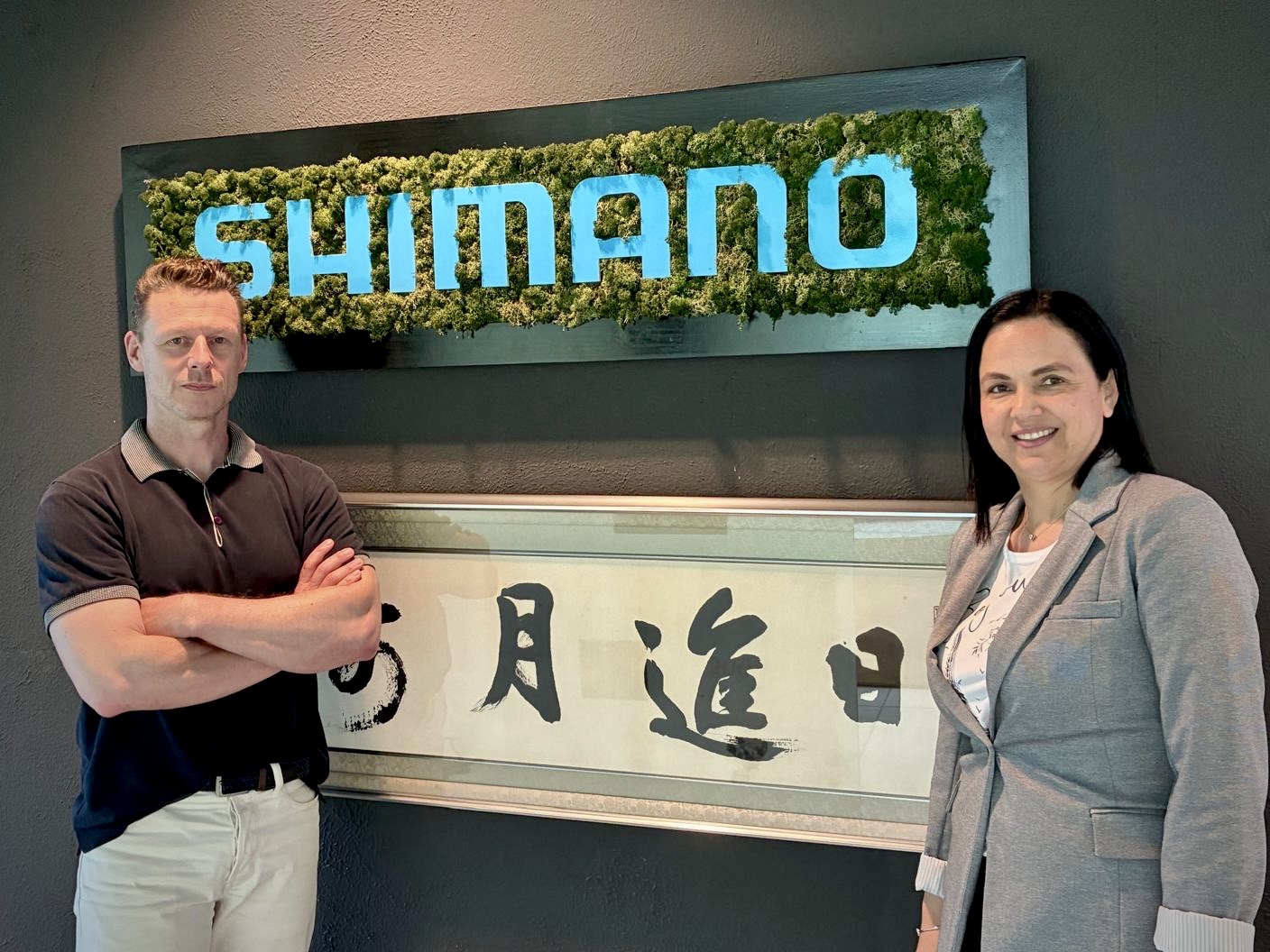
For Alessandra, the tool proved itself immediately in her profession: “Shimano already had its own methodology based on Prince2, with templates and stage gates. But there was a lot of room for each project manager to work in their own way. FCC helped us anchor that methodology: all templates in one place, the same project phases, clear stage gates. The tool guides you and reinforces the method. I can no longer imagine managing projects without it.”
One version of the truth
“If a project isn’t in Fortes, it doesn’t exist.”
Adoption: Information Is Key
The starting point was favorable: the organization itself had requested a project management tool. Still, there was work to be done. “There was some confusion with collaboration tools like Teams: why do we need this—we can already collaborate, can’t we?” says Alessandra. “Once we clarified the tool’s purpose—namely, that FCC forms the foundation of your project: baselines, Gantt charts with milestones, approval workflows, and phase gates—it became much easier to convince people. Education is key.” An introductory video was created to explain the tool’s main features. And a simple principle applied: one version of the truth. “If a project isn’t in Fortes, it doesn’t exist.”
Minimal input, maximum insight
A hallmark of the Shimano approach is cross-departmental collaboration. An agreement has been reached with the finance department that a project controller will upload expenses from the ERP system into FCC. “This ensures there’s a single source of truth for the budget, expenses, and forecasts,” Jan explains. “We then ask our project managers for the bare minimum: their forecast through the end of the project and an end date. And when you combine all that, you can accomplish a great deal.”
The result is a portfolio dashboard for the Portfolio Direction Group that includes the portfolio balance, budgets, status regarding time and costs, and monthly actuals. “An external program manager who has run very large programs recently said: ‘I’ve rarely seen such a professional dashboard at a relatively small organization.’ That’s really thanks to the Fortes tool. You don’t have to be a BI expert.”
Those insights also changed the decision-making process. “Everyone sensed that people were swamped with projects. Now we could quantify it: twenty ongoing projects, a backlog of forty projects. At this pace, we had enough work to last another six years, so let’s prioritize what’s really important. That way, you no longer base the discussion on gut feelings, but on numbers.” Every quarter, stakeholders are asked about their plans, which are posted as cards on the portfolio Kanban board and serve as input for the portfolio planning session.
4 years
Standardized Portfolio Management with
FCC
70→15
From Individual Initiatives to Concurrent Projects
50,000–100,000
Internal hours per year included in the portfolio of Shimano
14
European offices following a single operating procedure
The PMO as a Connector: Identifying Patterns and Driving Improvement
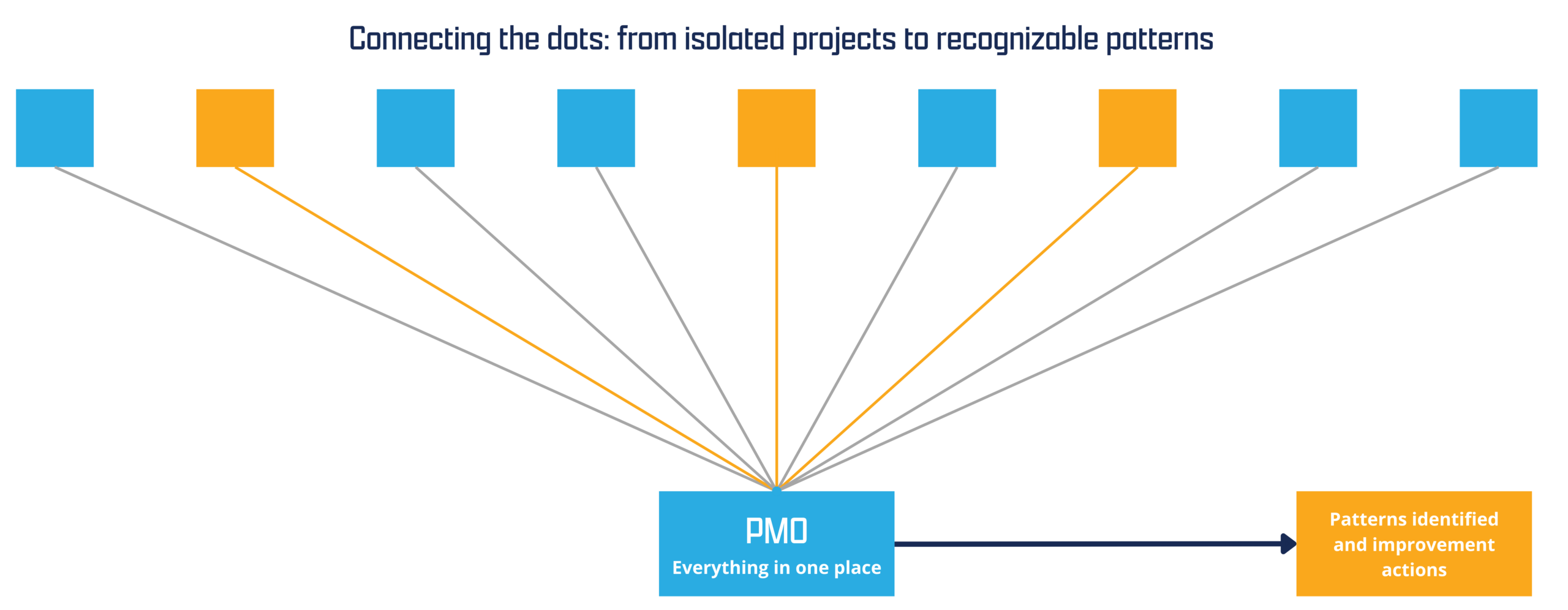
What Jan might like best about his four years of portfolio management at FCC: the PMO has become the place where everything comes together. “Connecting the dots. Anyone who initiates an individual project doesn’t see the patterns. We do, because lessons learned, risks, and escalations from all projects are all in one place.”
A prime example is data quality. “A new tool supports a process, and that process requires data. If that data isn’t managed properly in day-to-day operations, your new tool won’t work properly either. We saw that pattern repeat itself in project after project. Because we can zoom out to the portfolio level, we can identify such underlying causes and initiate improvement actions. If we hadn’t been there, everyone would have viewed it as an isolated project problem, and no one would have realized that data deserves structural attention.” The same applies to application lifecycle management: by recognizing patterns across projects, we realized that systematic management of the application landscape saves time and money.
Periodically, the PMO distills the most important lessons from all lessons learned for each project phase. “What lessons from the initiation phase can help a project manager avoid an escalation to the Portfolio Direction Group before he’s even started delivering? That saves a tremendous amount of time.”
One standard, including for external parties
Shimano regularly works with external implementation partners, who bring their own methodologies and tools to the table. That’s another area where FCC proves its value. “External parties are great at telling you what they’re doing; they’re fully in action mode. But comparing what they planned to deliver this month with what they actually delivered is often more difficult for them,” says Jan. “In Fortes, we also manage them through our phase gates and deliverables.” Alessandra adds: “This way, we create a single standard working method, both internally and externally. The templates and phase gates are already in place; external parties are quickly integrated, and we approve documents in the same way.”
Goals: Capacity, Benefits, and Strategy
With the European SAP implementation in full swing, the portfolio is now primarily focused on wrapping things up and staying on track. Next comes what Jan calls a “reset”: making the project environment more user-friendly so that teams truly embrace the standard functionality and are less likely to resort to standalone tools.
Skill capacity planning is also high on the list. Even before the SAP implementation, Shimano was already planning around five critical skills (such as business analysts, enterprise architects, and testers) to determine whether new projects could even be launched. “That was very useful, and I want to continue it,” says Jan. In addition, benefits management at the portfolio level is an attractive prospect: “We undertake all these projects to realize benefits. I want to be able to track what projects contribute to our portfolio goals and when the benefits are actually realized.” The strategy module is also on the wish list, initially as an analysis tool for the PMO itself.
Best Practices from Shimano Europe Group
What recommendations do Jan and Alessandra give to organizations getting started with portfolio management?
- Start with your way of working, not with the tool. First establish how you want to work; the tooling will then follow naturally and facilitate the process.
- Ask for the minimum, get the maximum out of it. A financial forecast and an end date per project are enough to build sharp insights and dashboards at portfolio level.
- Maintain one version of the truth. Connect your financial data from the ERP and agree: This is what we use for tracking, nothing else.
- Communicate clearly about the purpose of the tool. Explain the difference with collaboration tools like Teams; most of the resistance will then disappear by itself.
- Use your portfolio to learn Zoom out, recognize patterns, such as recurring data quality issues, and address the underlying causes organization-wide.
In conclusion
Would Jan Fortes recommend Change Cloud to other organizations? He doesn’t have to think twice:
“
You’re up and running quickly, and with very little effort you create very good insights. Out of the box it is immediately usable. Above all, the philosophy behind it, from strategy through portfolio to projects, helps enormously.
“
Jan Goes
Portfolio Management Officer, Shimano Europe Group
Curious to find out what Fortes Change Cloud can do for your organization?
Find out how to gain better control over your project and program portfolio, just like Shimano Europe Group.

